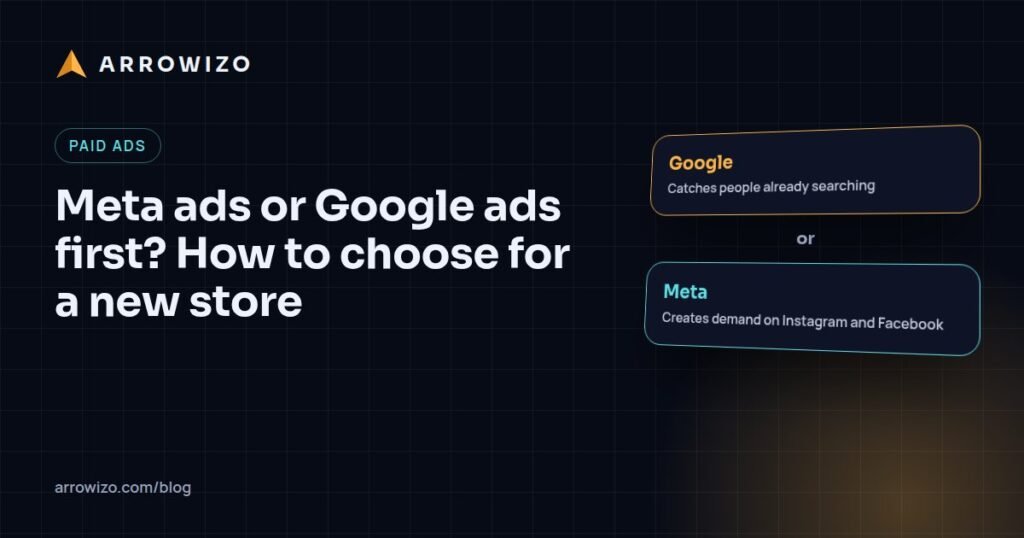
When you open a new online store, the first ad budget is usually small, and splitting it across every platform means none of them gets enough data to work. So the real question is which one to start with: Google or Meta (Facebook and Instagram). The answer depends mostly on one thing, whether people already search for what you sell.
The basic difference
Google ads reach people who are already looking. Someone types “running shoes for flat feet” or “custom name necklace gold”, and your product appears at the moment they want to buy. You capture demand that already exists.
Meta ads reach people who weren’t looking. They scroll Instagram, see your product in a short video, and decide they want it. You create demand that didn’t exist a minute earlier. Both work, for different kinds of product.
Start with Google when people already search for your product
Google Shopping and search ads fit products people know they need and actively compare: replacement parts, supplements, school uniforms, home appliances, gifts for a named occasion. Buyers arrive with intent, so conversion rates tend to be higher.
The trade-off is price. Across industries, the average Google Ads cost per click rose to $5.26 in 2025 from $4.66 in 2024, according to WordStream by LocaliQ’s benchmark report. Costs vary a lot by category, so check the estimates for your own keywords before you set a budget.
A quick test before you spend: put your main product terms into Google Keyword Planner. If the searches are there each month in your target country, Google is a strong first channel.
Start with Meta when the product sells on sight
Meta fits products people buy because they see them: fashion, jewellery, home decor, gadgets with a clear “wow” moment, print-on-demand designs, anything new that people don’t know to search for. Meta’s targeting finds likely buyers from interests and behaviour, and a good 15-second video can sell a product nobody has heard of.
The trade-off is creative. Meta ads live or die on the image or video. Expect to test several versions in the first weeks, because most ad creatives don’t win, and you need the winners to scale.
A simple first 30 days
- Before any ad, set up tracking: the Meta Pixel with the Conversions API, Google Analytics 4 and Google Ads conversion tracking. Without it you can’t tell which ads sell.
- Pick one main platform using the test above, and put about 80% of the first month’s budget there.
- Put the remaining 20% on retargeting: show ads to people who visited your store but didn’t buy. This is usually the cheapest sale you’ll get.
- On Meta, launch three to five different creatives and keep the ones with the lowest cost per purchase after a week. On Google, start with your best-selling products and add more once they convert.
- After 30 days, judge by cost per purchase and profit per order, not by clicks or likes.
Mistakes that waste a new store’s budget
- Sending ads to a slow or untrusted store. Fix load speed, shipping information and the returns page first.
- Changing everything every two days. Ad systems need a few days of data to learn who buys.
- Boosting Instagram posts instead of running proper sales campaigns. Boosts are built for engagement, not purchases.
- Copying a big brand’s budget split. A new store needs one channel working before it adds a second.
When to use both
Once one platform brings sales at a profit, add the other. Many stores find the combination works best: Meta finds new buyers, Google catches them later when they search your brand name or product. Arrowizo Ads lets you run Google, Meta and other networks from one place, with budgets and results side by side, which makes that second step easier to manage.